
Der Übebegleiter für Musiker:innen The practice companion for musiciansLe compagnon de travail des musiciennes et musiciensEl compañero de práctica para músicas y músicosIl compagno di studio per chi fa musicaO companheiro de prática para quem faz música
Taktura merkt sich dein letztes Stück, dein letztes Tempo, deine letzte Aufnahme und deine letzte Notiz. Alles liegt bereit, sobald du dein Instrument in die Hand nimmst. Taktura remembers your last piece, your last tempo, your last recording and your last note. It is all there the moment you pick up your instrument.Taktura retient ton dernier morceau, ton dernier tempo, ton dernier enregistrement et ta dernière note. Tout est prêt dès que tu prends ton instrument en main.Taktura recuerda tu última pieza, tu último tempo, tu última grabación y tu última nota. Todo está listo en cuanto tomas tu instrumento.Taktura si ricorda il tuo ultimo brano, il tuo ultimo tempo, la tua ultima registrazione e la tua ultima nota. È tutto pronto nel momento in cui prendi in mano lo strumento.O Taktura lembra a sua última peça, o seu último andamento, a sua última gravação e a sua última anotação. Está tudo à mão no momento em que você pega o instrumento.
Kostenlose Beta · iPhone, iPad und Android · Offline, deine Daten bleiben bei dir Free beta · iPhone, iPad and Android · Offline, your data stays with youBêta gratuite · iPhone, iPad et Android · Hors ligne, tes données restent chez toiBeta gratuita · iPhone, iPad y Android · Sin conexión, tus datos se quedan contigoBeta gratuita · iPhone, iPad e Android · Offline, i tuoi dati restano da teBeta gratuita · iPhone, iPad e Android · Off-line, os seus dados ficam com você
Kennst du das?Sound familiar?Ça te parle ?¿Te suena?Ti suona familiare?Soa familiar?
„Seit Tagen übe ich um die schwere Stelle herum.““For days I’ve been practising around the hard passage.”« Depuis des jours, je travaille tout autour du passage difficile. »«Llevo días practicando alrededor del pasaje difícil.»«Sono giorni che studio girando intorno al passaggio difficile.»«Faz dias que eu pratico em volta do trecho difícil.»
„Zwei Stunden geübt, und nichts ist wirklich besser.““Two hours of practice, and nothing is really better.”« Deux heures de travail, et rien n’a vraiment avancé. »«Dos horas practicando, y nada ha mejorado de verdad.»«Due ore di studio, e niente è davvero migliorato.»«Duas horas de prática, e nada melhorou de verdade.»
„Wo war ich stehengeblieben?““Where did I leave off?”« Où est-ce que j’en étais ? »«¿Dónde lo había dejado?»«Dove avevo smesso?»«Onde foi que eu parei?»
„Zwischen zwei Konzerten liegt das Stück drei Wochen still.““Between two concerts, the piece sits untouched for three weeks.”« Entre deux concerts, le morceau reste trois semaines sans bouger. »«Entre dos conciertos, la pieza se queda tres semanas parada.»«Tra due concerti il brano resta fermo tre settimane.»«Entre dois concertos, a peça fica parada três semanas.»
Nicht der Ehrgeiz fehlt, der Faden fehlt. It’s not ambition that’s missing, it’s the thread.Ce n’est pas l’envie qui manque, c’est le fil.No falta la ambición, falta el hilo.Non manca la volontà, manca il filo.Não falta vontade, falta o fio.
Die MomenteThe momentsLes momentsLos momentosI momentiOs momentos
Sechs Momente aus der App, zum Durchtippen. Metronom und Stimmgerät kannst du hier wirklich hören. Six moments from the app, tap through them. You can actually hear the metronome and tuner right here.Six moments de l’app, à parcourir. Le métronome et l’accordeur, tu peux vraiment les entendre ici.Seis momentos de la app para ir probando. El metrónomo y el afinador puedes oírlos aquí de verdad.Sei momenti dell’app, da toccare uno dopo l’altro. Il metronomo e l’accordatore qui li senti davvero.Seis momentos do app, para tocar um a um. O metrônomo e o afinador aqui você ouve de verdade.
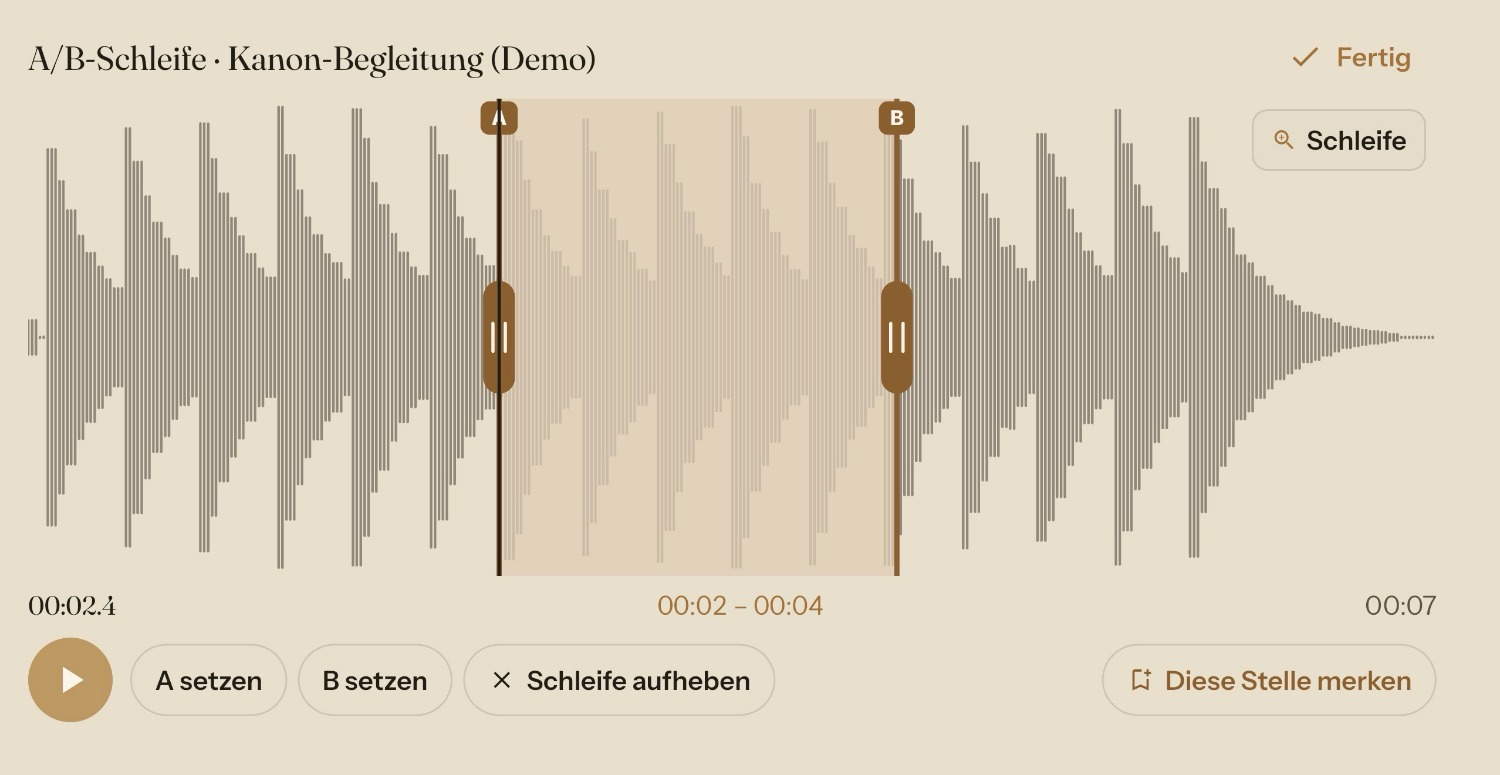
Übe zu Aufnahmen: 50 bis 150 Prozent Tempo, A/B-Schleife über die schwere Stelle und eine Tempo-Treppe bis zum Original.Practise along to recordings: 50 to 150 percent tempo, an A/B loop over the tricky passage and a tempo staircase up to the original.Travaille avec tes enregistrements : de 50 à 150 pour cent du tempo, une boucle A/B sur le passage difficile et un escalier de tempo jusqu’à l’original.Practica con tus grabaciones: del 50 al 150 por ciento del tempo, un bucle A/B sobre el pasaje difícil y una escalera de tempo hasta el original.Suona insieme alle registrazioni: tempo dal 50 al 150 per cento, loop A/B sul passaggio difficile e una scala di tempi fino all’originale.Toque junto com gravações: andamento de 50 a 150 por cento, loop A/B no trecho difícil e uma escada de andamentos até o original.
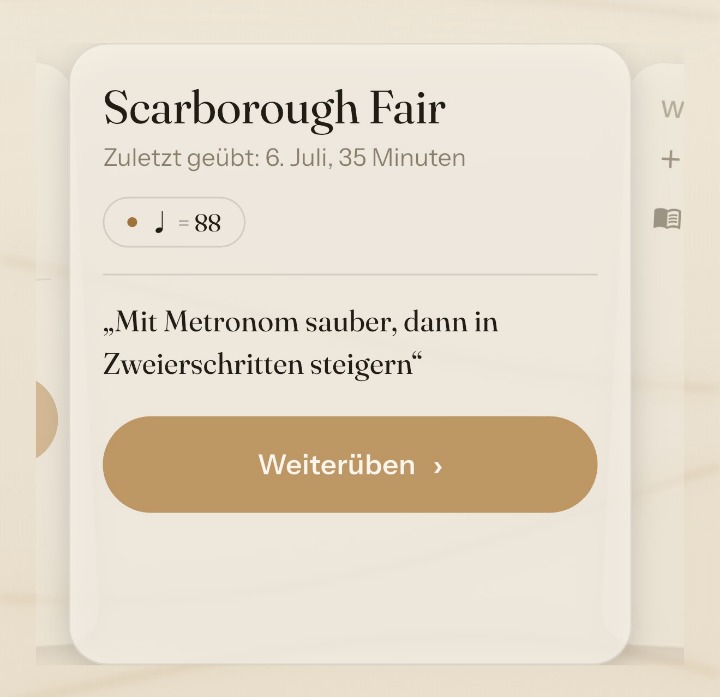
Der Heute-Bildschirm begrüßt dich mit genau einer Einladung: Weiterüben. Dahinter steht alles, was deine letzte Übe-Einheit ausgemacht hat. Kein Dashboard, nur der nächste Schritt.The Today screen greets you with exactly one invitation: Continue. Behind it sits everything that made up your last session. No dashboard, just the next step.L’écran Aujourd’hui t’accueille avec une seule invitation : Reprendre le fil. Derrière, il y a tout ce qui a fait ta dernière séance. Pas de tableau de bord, juste l’étape suivante.La pantalla Hoy te recibe con una sola invitación: Retomar el hilo. Detrás está todo lo que fue tu última sesión. Sin panel de control, solo el siguiente paso.La schermata Oggi ti accoglie con un solo invito: Riprendi. Dietro c’è tutto quello che ha fatto la tua ultima sessione. Nessun cruscotto, solo il passo successivo.A tela Hoje recebe você com um único convite: Retomar. Atrás dele está tudo o que compôs a sua última sessão. Nenhum painel, só o próximo passo.
Jedes Stück hat sein eigenes Tempoprofil: Taktura weiß, wo du gestern warst, und zeigt dir den Weg zum Zieltempo, Schlag für Schlag.Every piece has its own tempo profile: Taktura knows where you were yesterday and shows the road to your target tempo, beat by beat.Chaque morceau a son propre profil de tempo : Taktura sait où tu en étais hier et te montre le chemin vers le tempo cible, battement après battement.Cada pieza tiene su propio perfil de tempo: Taktura sabe dónde estabas ayer y te muestra el camino hacia el tempo objetivo, pulso a pulso.Ogni brano ha il suo profilo di tempo: Taktura sa dove eri ieri e ti mostra la strada verso il tempo obiettivo, battuta dopo battuta.Cada peça tem o seu perfil de andamento: o Taktura sabe onde você estava ontem e mostra o caminho até o andamento-alvo, batida após batida.
Tippen: hör dein Tempo, ♩ = 96 im 4/4-TaktTap to hear your tempo, ♩ = 96 in 4/4Touche : écoute ton tempo, ♩ = 96 à 4/4Toca: escucha tu tempo, ♩ = 96 en 4/4Tocca: ascolta il tuo tempo, ♩ = 96 in 4/4Toque: ouça o seu andamento, ♩ = 96 em 4/4 ♩ = 96 läuft, tippen zum Stoppen♩ = 96 playing, tap to stop♩ = 96 en cours, touche pour arrêter♩ = 96 sonando, toca para parar♩ = 96 in corso, tocca per fermare♩ = 96 rodando, toque para parar
Chromatisch und centgenau, mit wählbarem Kammerton. Kurz stimmen, weiterspielen. Dein Timer läuft weiter.Chromatic and cent-accurate, with adjustable reference pitch. Tune briefly, keep playing. Your timer keeps running.Chromatique et précis au cent près, avec diapason réglable. Un accord rapide, et tu continues. Ton minuteur tourne toujours.Cromático y preciso al centésimo, con diapasón ajustable. Afinas un momento y sigues. Tu cronómetro no se detiene.Cromatico e preciso al cent, con diapason regolabile. Accordi un attimo e riprendi. Il tuo cronometro continua a scorrere.Cromático e preciso no cent, com diapasão ajustável. Você afina rapidinho e continua. O seu cronômetro segue correndo.
Tippen: hör, wie die Saite in die Stimmung gleitetTap, hear the string glide into tuneTouche : écoute la corde se mettre en accordToca: escucha cómo la cuerda entra en afinaciónTocca, senti la corda scivolare in accordaturaToque, ouça a corda deslizar para a afinação Die Schwebung verklingt, sobald die Saite stimmt …The beating fades as the string comes into tune …Le battement s’estompe dès que la corde est juste …El batido se apaga en cuanto la cuerda está afinada …Il battimento svanisce appena la corda è in accordatura …O batimento some assim que a corda entra na afinação …
Aufnehmen mit einem Tipp, mitten im Spielen. Jede Aufnahme ist mit Stück, Stelle und Übe-Einheit verknüpft. Dein Fortschritt, hörbar gemacht.Record with one tap, mid-playing. Every recording is linked to its piece, passage and session. Your progress, made audible.Enregistre d’un geste, en plein jeu. Chaque enregistrement est lié à son morceau, son passage et sa séance. Tes progrès, rendus audibles.Graba con un toque, mientras tocas. Cada grabación está ligada a su pieza, su pasaje y su sesión. Tu progreso, hecho audible.Registri con un tocco, mentre suoni. Ogni registrazione è collegata al brano, al passaggio e alla sessione. I tuoi progressi, resi udibili.Você grava com um toque, no meio da execução. Cada gravação fica ligada à peça, ao trecho e à sessão. O seu progresso, tornado audível.
Tippen zum Anhören, dieselbe Stelle, drei Tempi. Hör den Unterschied. Tap to listen, the same passage, three tempos. Hear the difference.Touche pour écouter : le même passage, trois tempos. Entends la différence.Toca para escuchar: el mismo pasaje, tres tempos. Oye la diferencia.Tocca per ascoltare, lo stesso passaggio, tre tempi. Senti la differenza.Toque para ouvir, o mesmo trecho, três andamentos. Ouça a diferença.
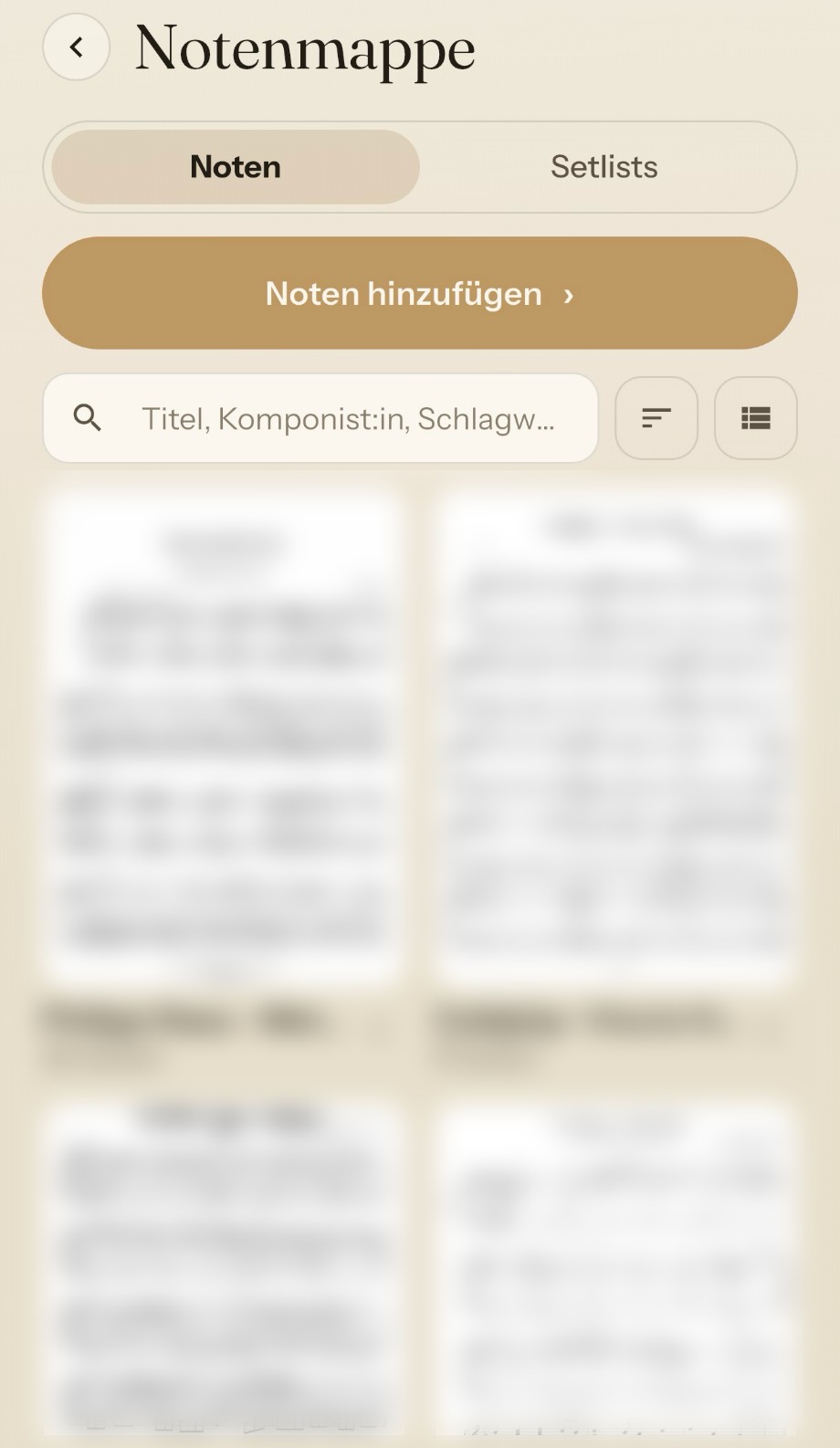
Importiere deine Noten als PDF oder fotografiere sie Seite für Seite. Blättere per Fußpedal, schreib mit echten Musikzeichen hinein und stell dir Setlists zusammen.Import your sheet music as a PDF or photograph it page by page. Turn pages with a foot pedal, write in with real music signs and build setlists.Importe tes partitions en PDF ou photographie-les page par page. Tourne les pages avec une pédale, annote avec de vrais signes musicaux et compose tes programmes.Importa tus partituras en PDF o fotografíalas página a página. Pasa página con un pedal, anota con signos musicales de verdad y crea tus programas.Importa le tue partiture in PDF oppure fotografale pagina per pagina. Giri le pagine con il pedale, ci scrivi dentro con veri segni musicali e componi i tuoi programmi.Importe as suas partituras em PDF ou fotografe página por página. Vire as páginas com o pedal, escreva nelas com sinais musicais de verdade e monte os seus programas.
Für Profis und LehrendeFor professionals and teachersPour les pros et les enseignantsPara profesionales y docentesPer professionisti e insegnantiPara profissionais e professores
Wer täglich übt oder unterrichtet, braucht kein weiteres Spielzeug, sondern Werkzeug, das dem Alltag standhält.If you practise or teach every day, you don’t need another toy, you need tools that hold up in real use.Quand on travaille ou enseigne tous les jours, on n’a pas besoin d’un jouet de plus, mais d’outils qui tiennent le coup.Quien practica o enseña a diario no necesita otro juguete, sino herramientas que aguanten de verdad.Chi studia o insegna ogni giorno non ha bisogno di un altro giocattolo, ma di strumenti che reggano il lavoro quotidiano.Quem pratica ou ensina todo dia não precisa de mais um brinquedo, e sim de ferramentas que aguentem o dia a dia.
EffizienzEfficiencyEfficacitéEficienciaEfficaciaEficiência
Die schwere Stelle einkreisen, in Schleife legen und Schritt für Schritt hochziehen.Circle the hard passage, put it on a loop and pull it up step by step.Cerne le passage difficile, mets-le en boucle et fais-le monter pas à pas.Acota el pasaje difícil, ponlo en bucle y súbelo paso a paso.Cerchia il passaggio difficile, mettilo in loop e tiralo su un passo alla volta.Circule o trecho difícil, coloque em loop e puxe para cima passo a passo.
KonzertPerformanceConcertConciertoConcertoConcerto
Ein Datum, und die Wochen davor ordnen sich von selbst.One date, and the weeks before it fall into order.Une date, et les semaines qui précèdent s’organisent d’elles-mêmes.Una fecha, y las semanas previas se ordenan solas.Una data, e le settimane prima si mettono in ordine da sole.Uma data, e as semanas anteriores se organizam sozinhas.
UnterrichtTeachingEnseignementEnseñanzaInsegnamentoEnsino
Gib weiter, was deine Schüler:innen zwischen den Stunden trägt.Pass on what carries your students between lessons.Transmets ce qui porte tes élèves entre deux cours.Pasa a tus alumnos lo que los sostiene entre clases.Passa avanti quello che sostiene i tuoi allievi tra una lezione e l’altra.Passe adiante o que sustenta os seus alunos entre uma aula e outra.
Wie alles zusammenhängtHow it all fits togetherComment tout se tientCómo encaja todoCome tutto si tiene insiemeComo tudo se conecta
Taktura ist kein Werkzeugkasten aus Metronom, Stimmgerät und Rekorder. Es ist ein Fluss, in dem jedes Werkzeug weiß, woran du arbeitest. Und während du spielst, entsteht daraus still der Kontext für morgen. Offline, auf deinem Gerät. Taktura is not a toolbox of metronome, tuner and recorder. It is a flow in which every tool knows what you are working on. And while you play, tomorrow’s context quietly takes shape. Offline, on your device.Taktura n’est pas une boîte à outils faite d’un métronome, d’un accordeur et d’un enregistreur. C’est un flux où chaque outil sait sur quoi tu travailles. Et pendant que tu joues, le contexte de demain se forme en silence. Hors ligne, sur ton appareil.Taktura no es una caja de herramientas con metrónomo, afinador y grabadora. Es un flujo en el que cada herramienta sabe en qué trabajas. Y mientras tocas, el contexto de mañana se forma en silencio. Sin conexión, en tu dispositivo.Taktura non è una cassetta degli attrezzi con metronomo, accordatore e registratore. È un flusso in cui ogni strumento sa a che cosa stai lavorando. E mentre suoni, nasce in silenzio il contesto per domani. Offline, sul tuo dispositivo.O Taktura não é uma caixa de ferramentas com metrônomo, afinador e gravador. É um fluxo em que cada ferramenta sabe no que você está trabalhando. E enquanto você toca, o contexto de amanhã vai nascendo em silêncio. Off-line, no seu aparelho.
Fortschritt ohne DruckProgress without pressureProgresser sans pressionProgreso sin presiónProgressi senza pressioneProgresso sem pressão
Taktura misst, was für Musiker:innen zählt: Regelmäßigkeit, Tempoentwicklung und echte Kontinuität am Stück. Keine Punktejagd, kein schlechtes Gewissen. Und wer Repertoire jongliert, sieht an der Zeit je Stück sofort, was zu kurz kommt. Taktura measures what matters to musicians: regularity, tempo development and real continuity within a piece. No point-chasing, no guilt. And if you juggle repertoire, time per piece shows you at once what is falling behind.Taktura mesure ce qui compte vraiment : la régularité, l’évolution du tempo et la vraie continuité sur un morceau. Pas de chasse aux points, pas de mauvaise conscience. Et si tu jongles avec ton répertoire, le temps par morceau montre aussitôt ce qui reste en arrière.Taktura mide lo que de verdad importa: la regularidad, la evolución del tempo y la continuidad real en una pieza. Sin cazar puntos, sin mala conciencia. Y si haces malabares con el repertorio, el tiempo por pieza te muestra enseguida qué se queda atrás.Taktura misura quello che conta per chi fa musica: regolarità, sviluppo del tempo e vera continuità su un brano. Nessuna caccia ai punti, nessun senso di colpa. E chi si destreggia tra più brani vede subito, dal tempo dedicato a ciascuno, che cosa resta indietro.O Taktura mede o que conta para quem faz música: regularidade, evolução do andamento e continuidade de verdade dentro de uma peça. Nenhuma caça a pontos, nenhuma culpa. E quem faz malabarismo com repertório vê na hora, pelo tempo em cada peça, o que está ficando para trás.
3 von 4 Übetagen, der Mittwoch war eine Pause, kein Bruch. 3 of 4 practice days, Wednesday was a rest, not a break.3 jours sur 4, le mercredi était une pause, pas une rupture.3 de 4 días, el miércoles fue una pausa, no una ruptura.3 giorni di studio su 4, il mercoledì è stato una pausa, non una rottura.3 de 4 dias de prática, a quarta-feira foi descanso, não ruptura.
Fünf Wochen, zwölf ruhige Schritte, vom ersten Lesen bis kurz vors Zieltempo. Five weeks, twelve quiet steps, from first read-through to just shy of the target tempo.Cinq semaines, douze pas tranquilles, de la première lecture jusqu’au seuil du tempo cible.Cinco semanas, doce pasos tranquilos, desde la primera lectura hasta casi el tempo objetivo.Cinque settimane, dodici passi tranquilli, dalla prima lettura fino a poco sotto il tempo obiettivo.Cinco semanas, doze passos tranquilos, da primeira leitura até pouco abaixo do andamento-alvo.
Manche brauchen Zuspruch, andere Ruhe. Du wählst, wie Taktura mit dir spricht, unterstützend, ausgewogen oder minimal. Jedes Motivationselement lässt sich einzeln abschalten. Some need encouragement, others need quiet. You choose how Taktura speaks to you, supportive, balanced or minimal. Every motivational element can be switched off individually.Certains ont besoin d’encouragements, d’autres de calme. Tu choisis comment Taktura te parle : soutenant, équilibré ou minimal. Chaque élément de motivation se désactive séparément.Unos necesitan ánimo, otros calma. Tú eliges cómo te habla Taktura: cercano, equilibrado o mínimo. Cada elemento de motivación se puede desactivar por separado.C’è chi ha bisogno di incoraggiamento e chi di silenzio. Scegli tu come Taktura ti parla: di sostegno, equilibrato o minimo. Ogni elemento motivazionale si può spegnere singolarmente.Tem quem precise de incentivo e quem precise de silêncio. Você escolhe como o Taktura fala com você: acolhedor, equilibrado ou mínimo. Cada elemento de motivação pode ser desligado sozinho.
Der NotentrainerThe note trainerLa lecture de notesLa lectura de notasLa lettura di noteA leitura de notas
Wer Noten sofort erkennt, spielt freier. Der Notentrainer arbeitet mit Ankernoten: wenige feste Bezugspunkte, von denen aus du jede Note in Sekundenbruchteilen liest. Musicians who recognise notes instantly play more freely. The note trainer works with anchor notes: a few fixed reference points from which you read any note in a split second.Qui reconnaît les notes immédiatement joue plus librement. L’entraînement s’appuie sur les notes repères : quelques points fixes à partir desquels tu lis chaque note en une fraction de seconde.Quien reconoce las notas al instante toca con más libertad. El entrenamiento usa notas de referencia: unos pocos puntos fijos desde los que lees cualquier nota en una fracción de segundo.Chi riconosce subito le note suona più libero. La lettura di note lavora con note di riferimento: pochi punti fissi da cui leggi ogni nota in una frazione di secondo.Quem reconhece as notas na hora toca mais solto. A leitura de notas trabalha com notas de referência: poucos pontos fixos a partir dos quais você lê qualquer nota numa fração de segundo.
Dazu Rhythmus, Gehör und Musikzeichen, in Einheiten unter fünf Minuten. Auf Wunsch hört das Mikrofon mit, ob du die Note wirklich triffst. Alongside it, rhythm, ear training and music signs, in units under five minutes. If you like, the microphone listens in to check you really hit the note.À côté, le rythme, l’oreille et les signes musicaux, en séances de moins de cinq minutes. Si tu veux, le micro écoute si tu joues vraiment la bonne note.Junto a eso, ritmo, oído y signos musicales, en sesiones de menos de cinco minutos. Si quieres, el micrófono escucha si tocas de verdad la nota.In più ritmo, orecchio e segni musicali, in sessioni sotto i cinque minuti. Se vuoi, il microfono ascolta e controlla che la nota sia davvero centrata.Além disso ritmo, ouvido e sinais musicais, em sessões de menos de cinco minutos. Se você quiser, o microfone escuta e confere se a nota saiu certa mesmo.
Von zwei Ankern aus liest du jede Nachbarnote, ganz ohne Abzählen. From two anchors, you read every neighbouring note, no counting up the lines.À partir de deux repères, tu lis chaque note voisine, sans jamais compter les lignes.Desde dos anclas lees cada nota vecina, sin contar líneas.Da due riferimenti leggi ogni nota vicina, senza contare nulla.A partir de duas referências você lê qualquer nota vizinha, sem contar nada.
Alles auf einen BlickEverything at a glanceTout en un coup d’œilTodo de un vistazoTutto in un colpo d’occhioTudo num olhar
Alles, was in Taktura steckt, kompakt zum Aufklappen. Everything inside Taktura, tap to expand.Tout ce que contient Taktura, à déplier.Todo lo que hay en Taktura, para desplegar.Tutto quello che c’è dentro Taktura, da aprire con un tocco.Tudo o que tem dentro do Taktura, para abrir com um toque.
Aus der BetaFrom the betaRetour de bêtaDesde la betaDalla betaDa beta
Wer dahinterstecktWho is behind itQui est derrièreQuién está detrásChi c’è dietroQuem está por trás
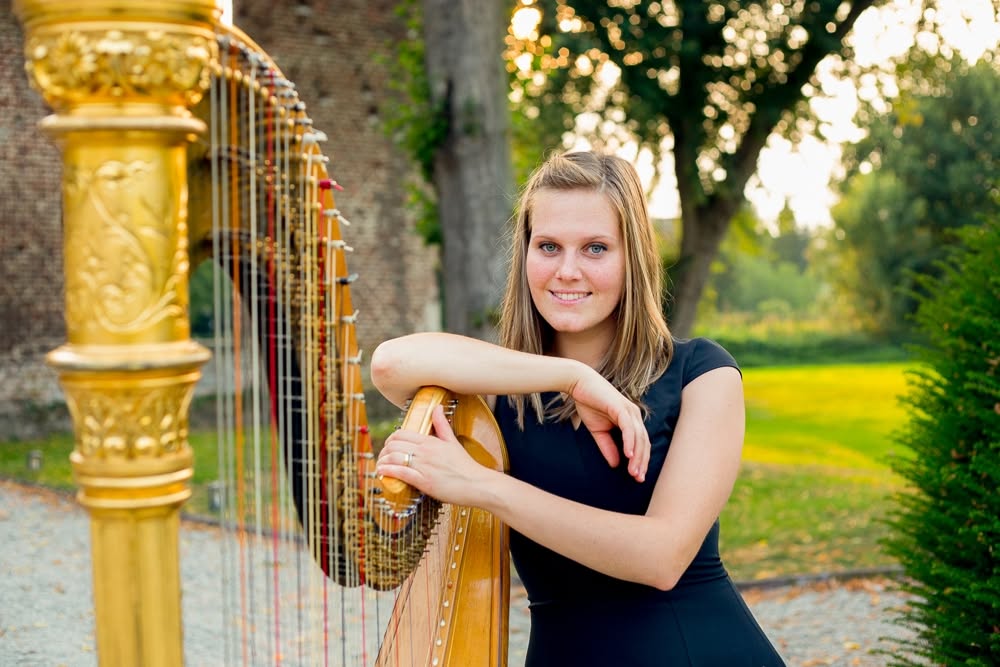
Als Profi-Harfenistin, Sängerin und Gründerin der Online Harfenschule kenne ich das Gefühl, wertvolle Übezeit an verstreute Hilfsmittel zu verlieren: hier ein Metronom, dort ein Stimmgerät, das Protokoll auf einem Zettel. Genau deshalb habe ich Taktura entwickelt.As a professional harpist, singer and founder of the Online Harfenschule, I know the feeling of losing precious practice time to scattered tools: a metronome here, a tuner there, the practice log on a slip of paper. That is exactly why I built Taktura.Harpiste professionnelle, chanteuse et fondatrice de l’Online Harfenschule, je connais bien ce sentiment : du temps de travail précieux qui se perd entre des outils éparpillés, un métronome ici, un accordeur là, le journal sur un bout de papier. C’est exactement pour ça que j’ai créé Taktura.Como arpista profesional, cantante y fundadora de la Online Harfenschule, conozco bien esa sensación: tiempo de práctica valioso que se pierde entre herramientas dispersas, aquí un metrónomo, allí un afinador, el diario en un papelito. Justo por eso creé Taktura.Da arpista professionista, cantante e fondatrice della Online Harfenschule conosco la sensazione di perdere tempo prezioso di studio dietro a strumenti sparsi: qui un metronomo, lì un accordatore, il diario su un foglietto. È proprio per questo che ho sviluppato Taktura.Como harpista profissional, cantora e fundadora da Online Harfenschule, conheço a sensação de perder tempo precioso de prática com ferramentas espalhadas: aqui um metrônomo, ali um afinador, o registro num papelzinho. Foi exatamente por isso que eu criei o Taktura.
Klare Routinen, alles an einem Ort, und ein Fortschritt, den du wirklich siehst. Praxisnah gedacht von einer Musiklehrerin, damit dein Üben so fokussiert und bereichernd ist, wie du es dir wünschst.Clear routines, everything in one place, and progress you can actually see. Thought through by a music teacher who practises every day, so your practice is as focused and rewarding as you want it to be.Des routines claires, tout au même endroit, et des progrès que tu vois vraiment. Pensé par une professeure de musique qui travaille chaque jour, pour que ton travail soit aussi concentré et enrichissant que tu le souhaites.Rutinas claras, todo en un mismo lugar y un progreso que se ve de verdad. Pensado por una profesora de música que practica cada día, para que tu práctica sea tan concentrada y enriquecedora como tú quieras.Routine chiare, tutto in un posto solo e progressi che vedi davvero. Pensato con i piedi per terra da un’insegnante di musica, perché il tuo studio sia concentrato e arricchente come lo desideri.Rotinas claras, tudo num lugar só e um progresso que você vê de verdade. Pensado com os pés no chão por uma professora de música, para que a sua prática seja tão concentrada e enriquecedora quanto você quiser.

TakturaTakturaTakturaTakturaTakturaTaktura
Der stille Begleiter, der sich alles merkt, damit du es nicht musst, und der sich zurückzieht, sobald du spielst. The quiet companion that remembers everything so you don’t have to, and steps back the moment you play.Le compagnon discret qui retient tout pour que tu n’aies pas à le faire, et qui s’efface dès que tu joues.El compañero silencioso que lo recuerda todo por ti, y que se retira en cuanto tocas.Il compagno silenzioso che si ricorda tutto, così non devi farlo tu, e che si fa da parte appena inizi a suonare.O companheiro silencioso que lembra de tudo, para você não precisar lembrar, e que se recolhe assim que você começa a tocar.
* Taktura ist noch in Entwicklung. Wer sich vormerkt, bekommt einen Testzugang, sobald die Beta so weit ist. * Taktura is still in development. Sign up and you get test access as soon as the beta is ready.* Taktura est encore en développement. En t’inscrivant, tu reçois un accès de test dès que la bêta est prête.* Taktura aún está en desarrollo. Si te apuntas, recibirás acceso de prueba en cuanto la beta esté lista.* Taktura è ancora in sviluppo. Chi si prenota riceve un accesso di prova appena la beta è pronta.* O Taktura ainda está em desenvolvimento. Quem reservar recebe um acesso de teste assim que a beta estiver pronta.
Eine Nachricht, wenn Taktura erscheint. Kein Newsletter dazwischen. Du kannst dich jederzeit abmelden, eine Mail an hello@taktura.app reicht.One message, when Taktura launches. No newsletter in between. You can unsubscribe any time, an email to hello@taktura.app is enough.Un seul message, à la sortie de Taktura. Pas de newsletter entre-temps. Tu peux te désinscrire à tout moment, un mail à hello@taktura.app suffit.Un solo mensaje, cuando salga Taktura. Sin newsletter por medio. Puedes darte de baja cuando quieras, basta un correo a hello@taktura.app.Un messaggio, quando Taktura esce. Nessuna newsletter nel frattempo. Puoi cancellarti in qualsiasi momento, basta una mail a hello@taktura.app.Uma mensagem, quando o Taktura sair. Nenhuma newsletter no meio. Você pode se descadastrar a qualquer momento, basta um e-mail para hello@taktura.app.